
From Design to Installation: What Determines a Long-Lasting Deck ?
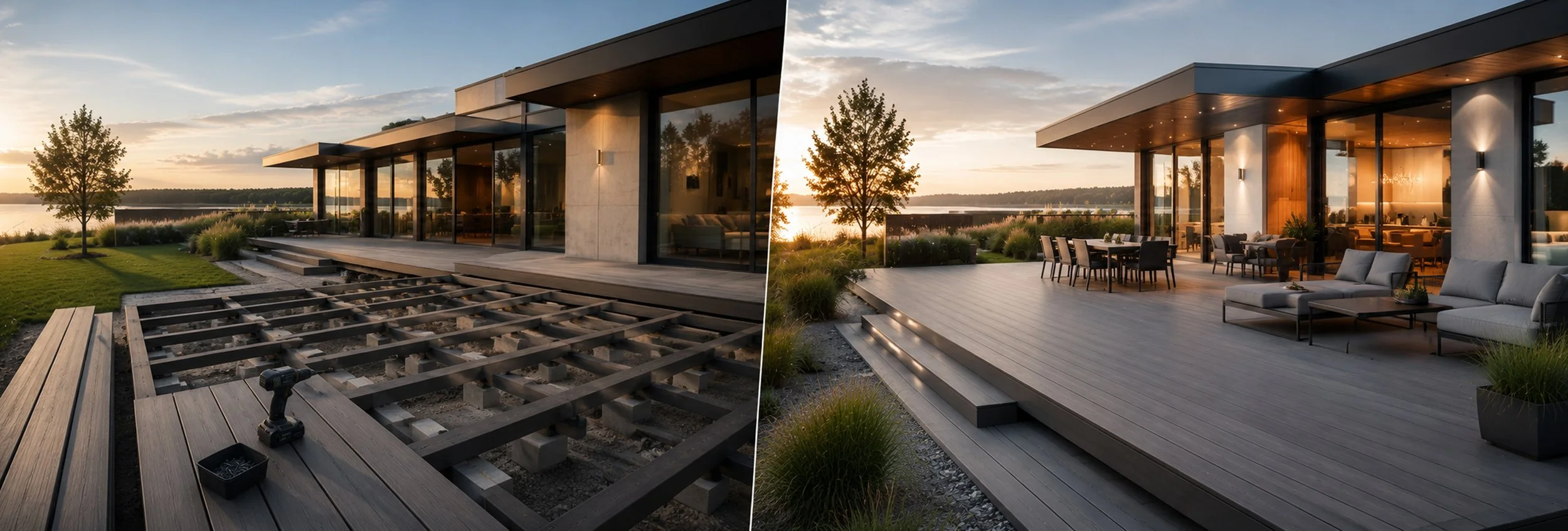
A deck should deliver decades of reliable performance—not constant repairs, refinishing, or replacement. The longevity of any outdoor deck depends on decisions made long before the first board is installed. Proper planning, durable materials, a solid substructure, and professional installation all play a critical role in creating a low-maintenance deck that stands up to moisture, UV exposure, temperature changes, and heavy everyday use.
Whether you're building a residential backyard deck, commercial outdoor space, dock, boardwalk, or patio, understanding these key factors will help maximize durability and reduce long-term ownership costs.
Table of Contents
1. Planning the Project
2. Choosing the Right Decking Material
3. Building a Strong Foundation
4. Professional Installation Matters
1. Planning the Project
Every durable deck starts with a well-designed plan. Before construction begins, it's important to evaluate drainage, sun exposure, climate, expected foot traffic, and the intended use of the space.
A residential deck has different performance requirements than a commercial boardwalk, marina, restaurant patio, or public outdoor area. Addressing these factors during the design phase helps prevent structural issues, standing water, and premature material failure later.
Careful planning reduces maintenance costs while extending the lifespan of the entire deck.
2. Choosing the Right Decking Material
The decking material has one of the biggest impacts on long-term performance.
Traditional wood offers a natural appearance but requires ongoing maintenance, including staining, sealing, and repairs. Exposure to moisture, sunlight, insects, and freeze-thaw cycles can lead to cracking, warping, splintering, and rot.
Eco Valor recycled plastic decking boards provide a longer-lasting alternative. Unlike wood, they do not absorb moisture, rot, warp, or splinter. They maintain dimensional stability in changing weather conditions and require virtually no maintenance throughout their service life.
The result is a durable outdoor decking solution that reduces maintenance costs, minimizes repairs, and delivers reliable performance year after year.
3. A Strong Substructure Creates Long-Term Stability
Even the best decking boards cannot compensate for a poorly built foundation.
Proper joist spacing, a stable base, effective drainage, and adequate structural support are essential for preventing movement, sagging, and uneven surfaces over time.
Decks designed for heavier loads—including commercial projects, public spaces, and high-traffic outdoor areas—may require additional reinforcement to ensure long-term structural integrity.
A properly engineered substructure protects the investment and extends the life of the entire decking system.
4. Professional Installation Makes the Difference
Proper installation is the final step in building a deck that lasts.
Correct expansion gaps, accurate fastener placement, and proper installation techniques allow decking materials to perform as intended through changing temperatures and seasonal weather conditions.
Small installation mistakes can eventually lead to larger structural problems, costly repairs, and reduced service life.
When every component—from design to installation—is completed correctly, the result is a beautiful, low-maintenance deck that performs reliably for decades.
Build Once. Enjoy for Years.
A high-quality deck is the result of smart planning, durable materials, and expert installation—not luck.
If you're planning a new decking project, the Eco Valor team can help you choose the right recycled plastic decking boards and structural components for your application, ensuring long-lasting performance with minimal maintenance.